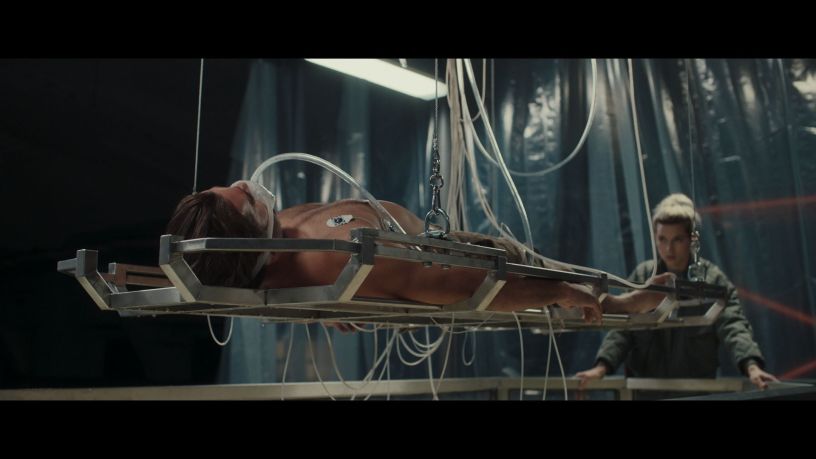
Spoilers will get around to do backups next week, for sure.
The subject of a technological leap challenging the norms, morals and possible security implications is a hot topic right now. The current discussion surrounding the future potential of AI has really reached a point where it’s not theoretical anymore. When a movie starts by mentioning global injustice and social inequalities are ramped up that is not really fiction. It’s when they also seem to have gone past their implied moral dilemma that we can guess we’re deep in the sci-fi realm. One would expect such discussions to have come up long before the commercial application.
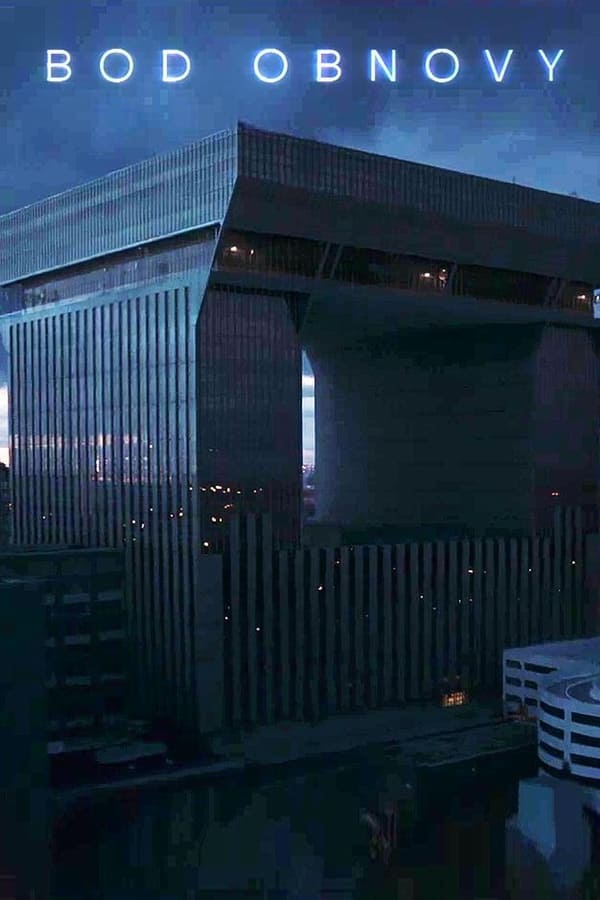
Restore Point (2023) is directed by Robert Hloz based on the screenplay by Tomislav Čečka and Zdeněk Jecelín. We are in Prague of 2041. Science and technology have given humanity a way to restore life and memory via routine back ups to the cloud storage controlled by the Institute. By law, you can only be restored back to life if your backup does not exceed 48 hours from your time of death. Otherwise, you are gone for sure. Unsurprisingly, not everyone is celebrating such an achievement.
Detective Emma “Em” Trochinowska (Andrea Mohylová) is investigating the murder of one of the top scientists of the institute, David Kurlstat (Matěj Hádek) and his wife under mysterious circumstances. Their deaths seem to have been orchestrated by the rebel group “River of Life” who seeks to stop the Institute of Restoration. The case will put Em in the sights of the head of the Institute, the tech guru known as Rohan (Karel Dobry) as well as the Europol, who seem to be ready to bury the case rather than solve it. Adding fuel to the fire, this is personal for Em. Her husband, an accomplished pianist, was killed by “River of Life” more than two days after his last backup and passed away without being restored.
It’s a very linear detective story set in a neo-noir cyberpunk era with holograms and self-driving cars. However, the execution is clean and sharp. Establishing shots do not linger unnecessarily. People don’t stop and stare at visual effects when they are routine, so the camera just shows them in the background and moves on. The brutalist architecture of buildings is shown in broad daylight, dull and gray and curiously shaped. The people walking by are unamused, even bored, going about their day.
Highly recommended for a clean execution and smooth storytelling. The twists and turns are not particularly surprising. Yet running along its story there’s a moral quandary about blurring life and death. At some point, a privatization option is discussed that would simply put eternal life in the hands of the privileged crowd. Very much worth a watch.
That will do for now.
 Never Think Impossible